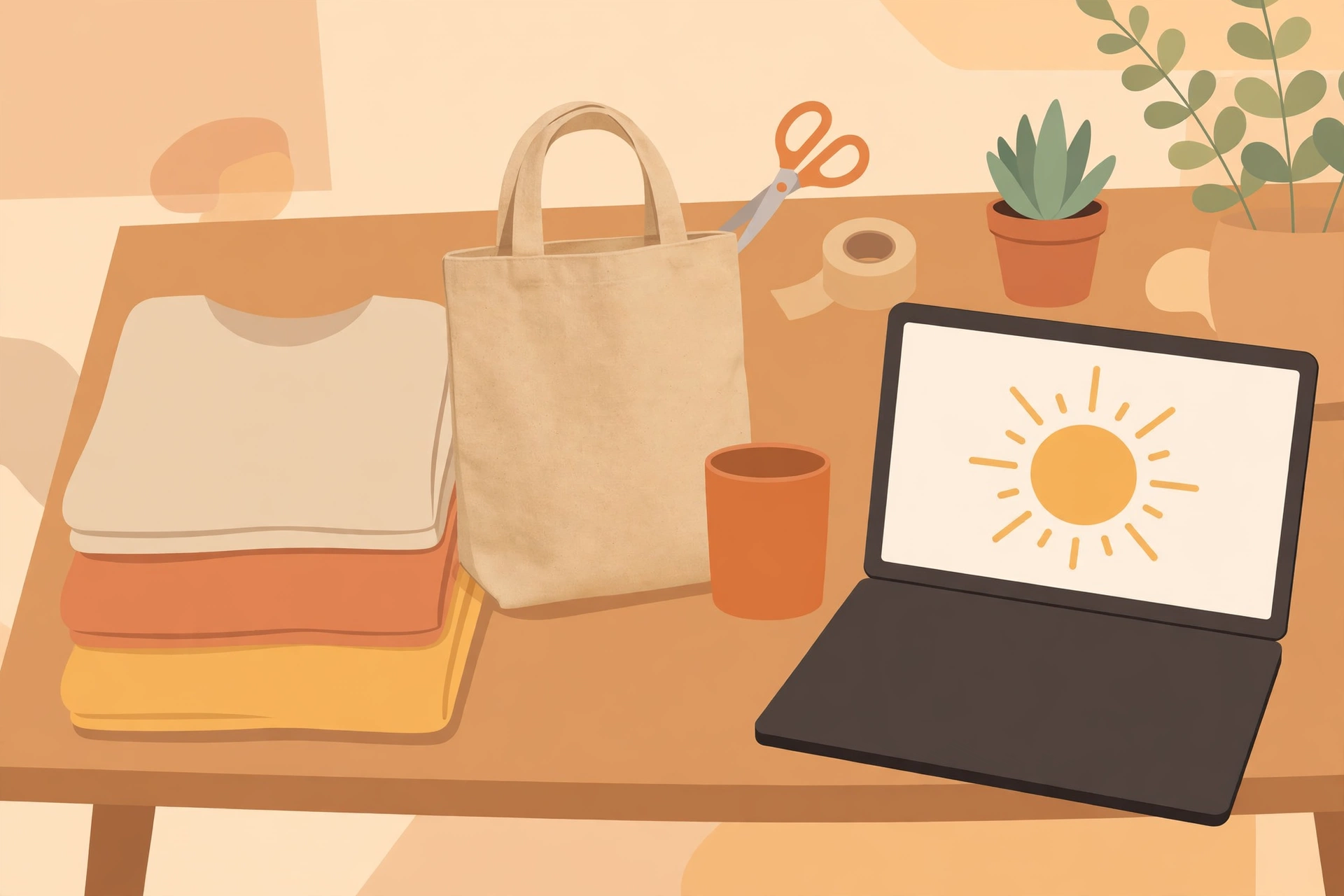
Print-on-demand lets you sell custom designs on products such as t-shirts, mugs and tote bags without buying stock in advance. You create the design, a print partner prints and ships each item only after a customer orders it, and you keep the difference between the selling price and the production cost. It is a popular first side hustle because the upfront cost is low — but low cost does not mean easy money. This guide explains how it works, what it honestly costs, and how to start sensibly.
How Print-on-Demand Actually Works
- You create a design for a product, such as a t-shirt or mug.
- You list that product in an online store or marketplace, with your price.
- A customer places an order.
- Your print partner prints the design, packs the item and ships it directly to the customer.
- You are paid the selling price minus the partner’s base cost and any platform fees.
You never handle the stock, the printing or the delivery. That convenience is the main appeal — and also why your profit per item is usually modest.
What You Need to Start
- A few original designs, not copied artwork or trademarked logos. Using someone else’s characters, logos or slogans can get your store closed.
- A print partner and a place to sell: either your own online store connected to a print provider, or a marketplace that handles printing for you.
- Basic product details: clear titles, honest descriptions, and mock-up images that show what the buyer will actually receive.
- A small amount of time each week for designs, listings and promotion. Most beginners underestimate this part.
Pros and Cons
Pros: No inventory to buy or store; low upfront cost; you can test many designs without financial risk; printing, packing and shipping are handled for you; it can run alongside a full-time job.
Cons: Low profit per item, so volume matters; you have little control over print quality and delivery times; competition is heavy, especially for generic designs; sales are rarely instant — building an audience takes time; returns and customer questions still land on you.
Tips for Your First Designs
- Start narrow. Designs for a specific hobby, job or community usually sell better than generic motivational quotes.
- Launch with a small set — for example, five to ten solid designs — rather than fifty rushed ones.
- Order a sample of your own best design if you can. Checking the real print quality, colours and fabric before promoting it avoids disappointed buyers.
- Write descriptions honestly: state the product type, colours available and care instructions, and do not promise premium quality you have not checked.
- Promote where your audience already is, such as a social media page, a blog post or a relevant community — but follow each community’s rules about selling.
Frequently Asked Questions
Q: Do I need money to start print-on-demand? A: Usually very little. Most platforms let you list for free, and you pay the production cost only when an order comes in. Optional costs include a store subscription, design tools or a sample order.
Q: How much can I earn? A: It varies widely. Profit per item is typically small, so earnings depend on how many items you sell. Treat early months as a learning period, not a reliable income.
Q: Do I need design skills? A: Basic skills help, but simple text-based and minimalist designs can work well. Free and low-cost design tools are enough to start, and originality matters more than complexity.
Q: What sells best? A: There is no guaranteed winner. Designs tied to a clear niche, an occasion or a shared interest tend to perform better than designs aimed at everyone.
You May Also Like
- How to Sell Digital Products Online: A Beginner’s Guide to Your First Sale
- How to Start Freelancing With No Experience: A Practical Beginner’s Guide
Print-on-demand is a genuinely low-risk way to test whether people will pay for your designs, but it rewards patience, originality and consistent effort — not a flood of copied designs. Start small, check your own product quality, and give your store time to find its audience. One honest, well-made design that people actually want will beat a hundred forgettable ones.